

Bright Yang - harmonyaccessory
Flat Back Hotfix Stone vs. Non-Hotfix Stone
Both are flat-back rhinestones, but the core difference lies in whether the back has a pre-applied adhesive layer — a seemingly minor distinction that determines entirely different uses, suitable materials, and application methods.
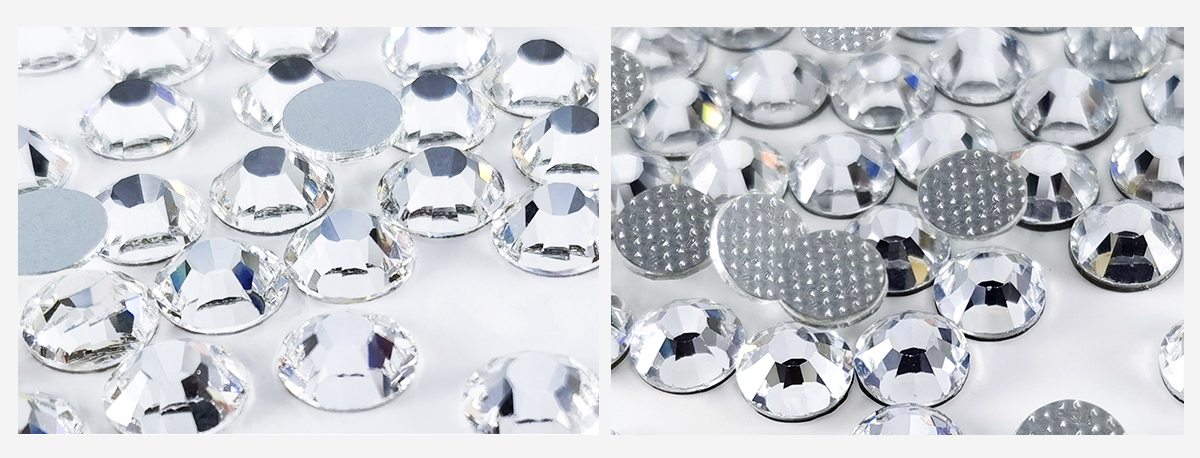
1. Different Backing Coating
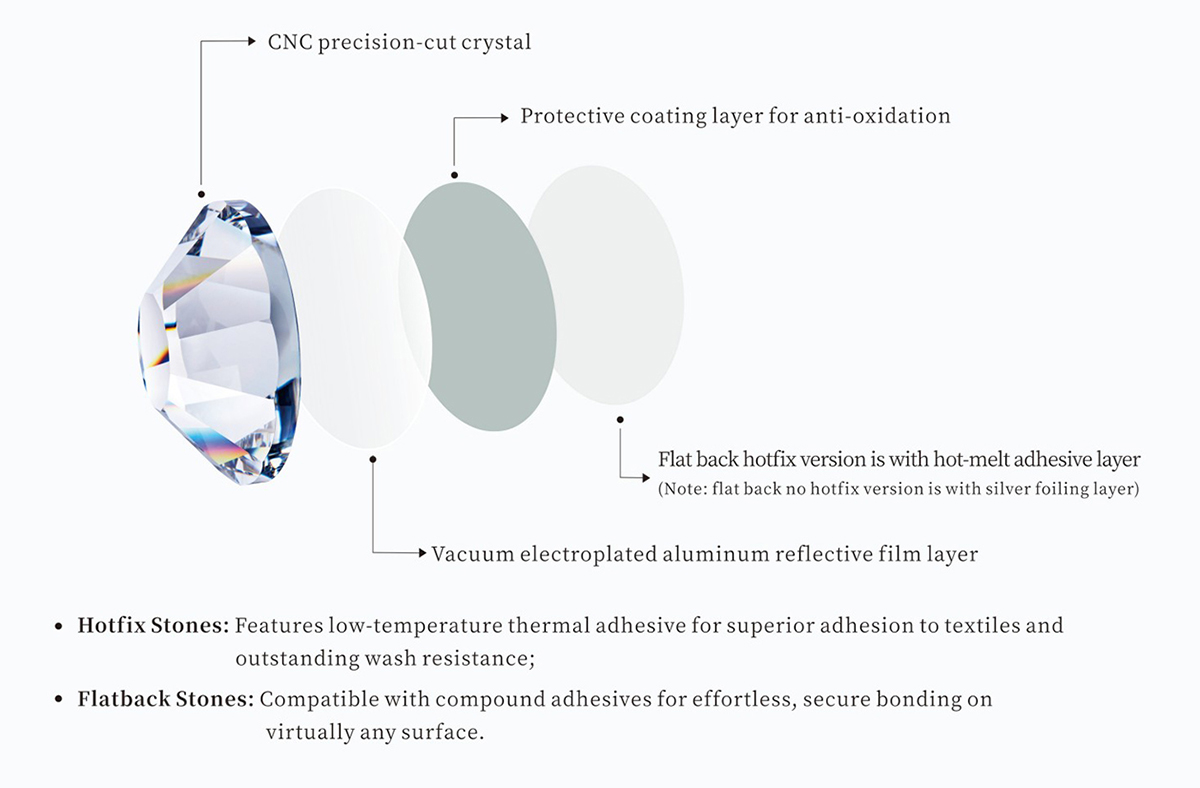
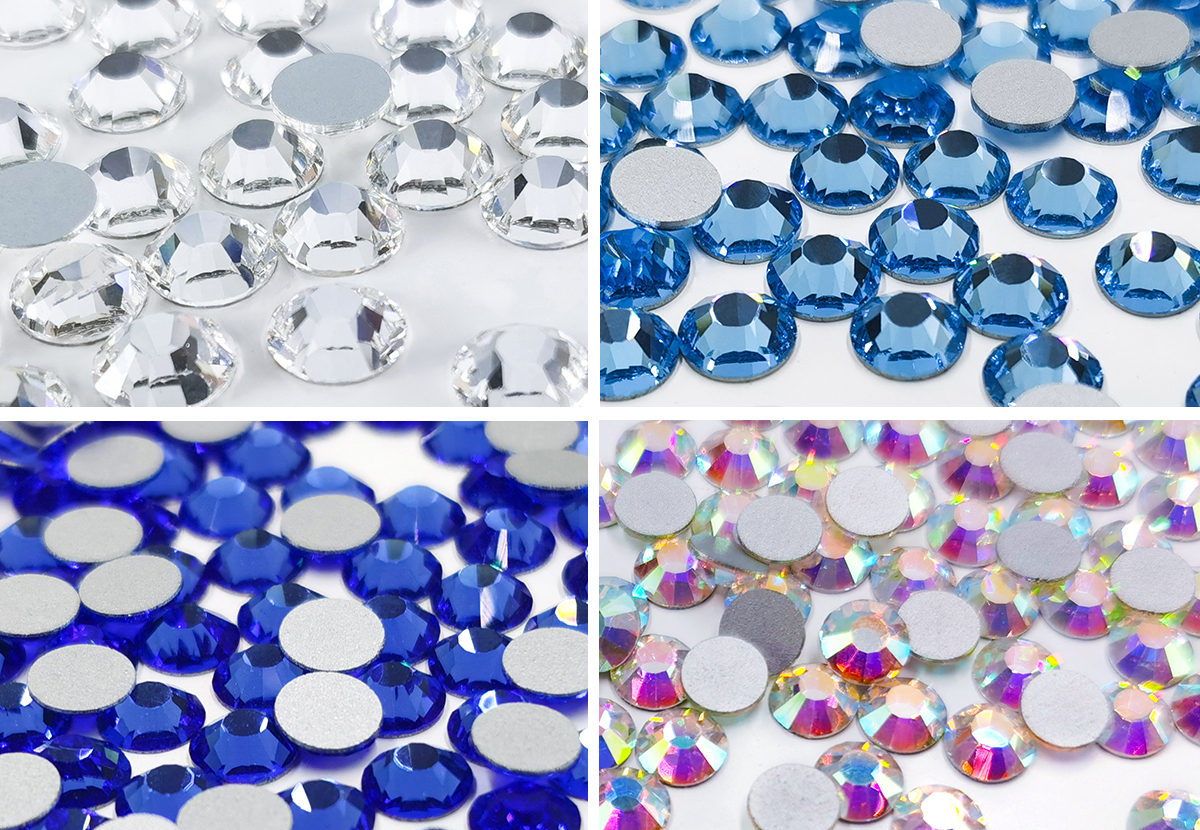
Hotfix Stone: Features a heat-activated adhesive layer on the bottom that bonds when heated.
Flat Back Stone (Non-Hotfix): Has no heat-activated adhesive layer — only a protective coating — and requires external glue for attachment.
2. Different Fixing Methods
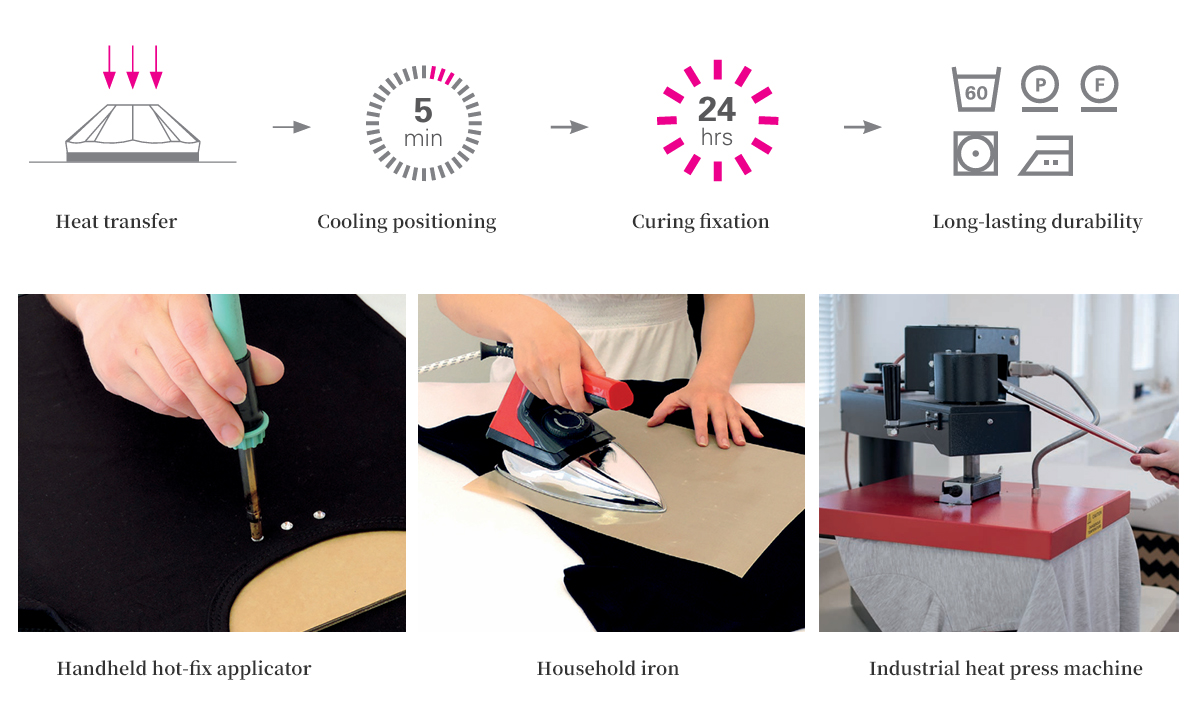
Hotfix Rhinestone
Applied via heat transfer — using an iron or heat press machine, the adhesive melts and penetrates the fabric fibers upon heating, forming a strong bond as it cools.
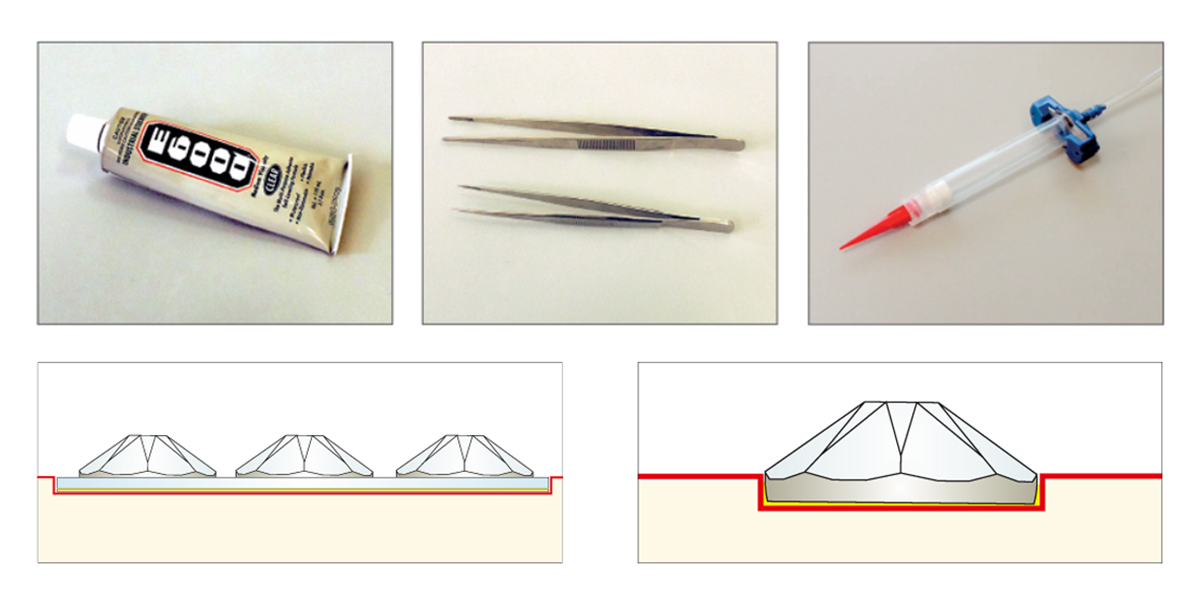
Flat Back Rhinestone (Non-Hotfix)
Applied via manual gluing — using specialized adhesives like E6000 or Gem-Tac, applied by hand or with a glue dispenser.
3. Different Application Scenarios
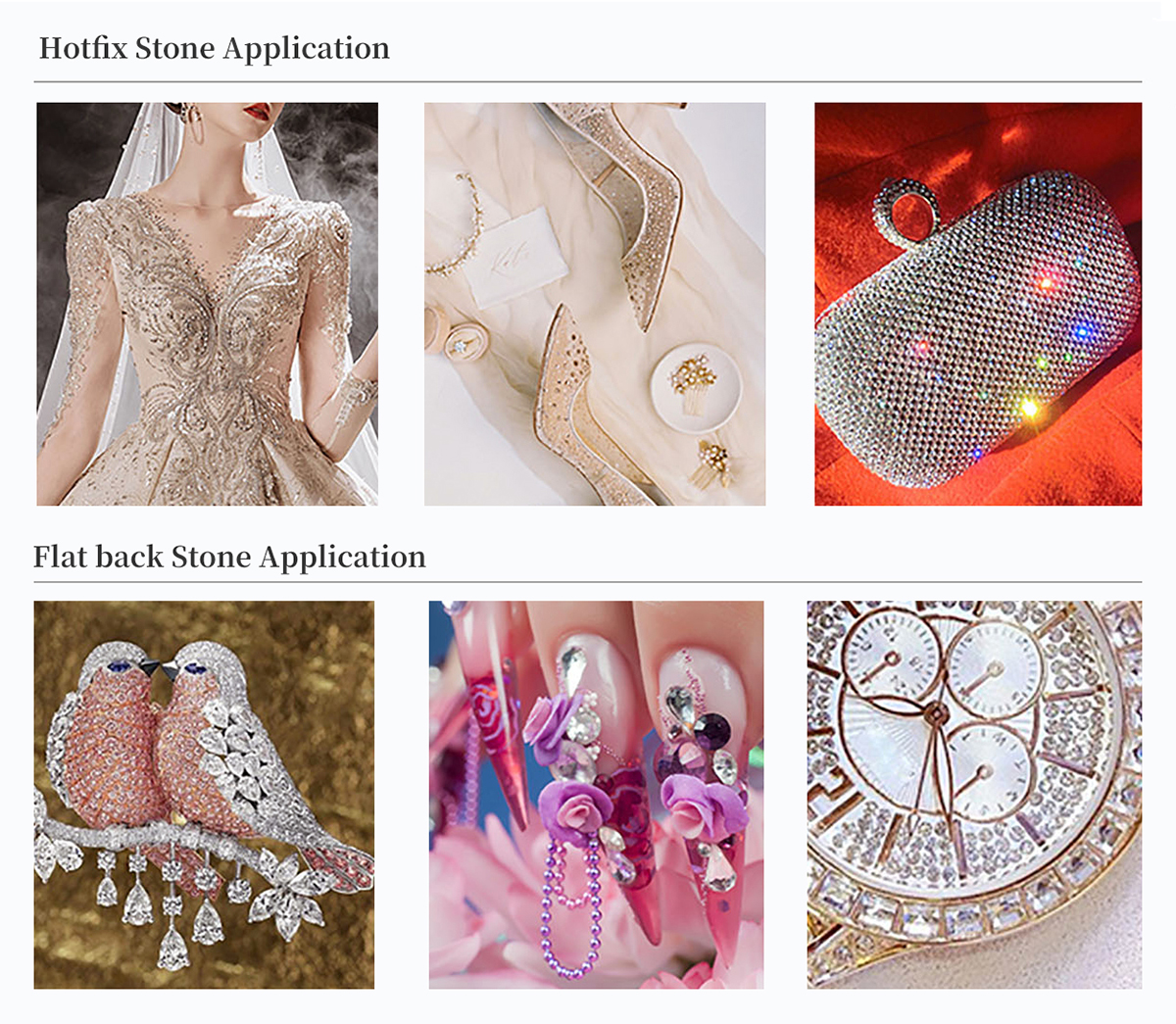
Hotfix Stone: Primarily used in textiles and apparel — bulk production of gowns, stage costumes, fashion wear, sportswear, everyday clothing, as well as footwear, bags, and hats.
Flat Back Stone: Mainly used in craft and decorative applications — nail art, phone cases, clocks, resin art, decorative ornaments, and also for single-piece custom gowns or stage costumes (hand-applied one by one).
How to Choose?
If your project involves bulk garment production and demands high efficiency and strong adhesion — choose Hotfix Stone.
If your application involves nail art, phone cases, rigid items, or fabrics that cannot withstand high heat — choose Non-Hotfix Stone.
How to Choose the Right Quality Tier?
There is no single "best" quality — only the one that best fits your audience, application, and budget.
- Choose Swarovski ElementsEuropean — if your brand demands "absolute top-tier" and your customers are willing to pay a premium.
- Choose Chinese PremiumPremium — if you want near-European visual effects, competitive pricing, and flexible service.
- Choose Chinese StandardStandard — if you are cost-driven, producing at massive volume, with minimal requirements for per-piece sparkle or durability.
Recommendation
Chinese Premium Brand — Crystalunite Rhinestones, the best balance of quality and cost.
Need help selecting the right stone type or quality tier for your project?
Our sourcing experts are ready to provide personalized recommendations based on your specific application.
Contact Us for Free AdviceWhatsApp: +86 18138732284 | Email: h617@harmony8.cn
Ordering and verification: MOQ 1 pack per design for stock crystal elements, sampling 7 working days, bulk production 7-15 working days; stock colours ship in 3 working days. Whether a stone carries a pre-applied adhesive layer decides the application method, and the working parameters for hotfix stones come from the maker's manual. Source: Preciosa application manual.
Hotfix vs Flat Back vs Sew-on: Side-by-Side
The three fixing methods differ in temperature exposure, labour and repairability. Figures below come from our own product specifications where available; rows marked Not tested have not been measured under a standard method and are not estimated.
| Parameter | Hotfix (glue-back) | Flat back (glue-on / prong) | Sew-on |
|---|---|---|---|
| Fixing method | Heat-activated adhesive | Adhesive or prong setting | Thread |
| Equipment | Heat press or hotfix wand | None (or dispensing machine) | Sewing machine or hand needle |
| Working temperature | 135–145°C delicate fabrics; 155–165°C denim and cotton | Ambient | Ambient |
| Dwell time | 12–15 seconds at medium pressure | — | — |
| Size coverage | SS3–SS48 | SS3–SS48 | SS sizes; 2–16 mm for pearls |
| Minimum order | 24 pieces custom / 1 pack stock elements | 24 pieces | 24 pieces |
| Labour per 100 pieces (seconds) | 15–35 s | 400–600 s | 1,000–2,000 s |
| Wash durability (40°C) | Not tested | Not tested | Not tested |
| Profile height | Medium | Low | High (hole + thread) |
| Repairability | Re-press | Re-glue | Unpick and re-sew |
| Typical failure | Stone lift; fabric scorch | Adhesive yellowing; drop-off | Thread wear; hole tear |
| Best for | Volume flat patterns | Heat-sensitive fabrics; spot placement | Couture; drape-sensitive light fabrics |
Which Method for Your Order
| Scenario | Recommended | Why |
|---|---|---|
| Heat-sensitive fabric (coated, thin polyester) | Flat back | No heat cycle, no scorch risk |
| Volume order, flat graphic | Hotfix / transfer | Labour scales down with quantity |
| Couture piece, visible thread acceptable | Sew-on | Highest profile and fully repairable |
| Mixed fabric panel | Hotfix on stable areas, sew-on on drape | Match method to the substrate, not to the stone |
Test references for the untested rows: ASTM D3359 (adhesion by tape test), ASTM D4966 (Martindale abrasion), internal 40 °C / 5-cycle wash; material safety follows OEKO-TEX STANDARD 100.
Adhesive Versus Mechanical — the Repair Question
Hotfix is adhesive; flat back can be glued or set in metal. The difference shows up after the first failure: a lifted hotfix stone can be re-pressed on the spot, a glued flat back has to be re-glued and cured, and a set stone can be replaced without touching the surrounding work.
For a garment that will be serviced rather than replaced, that is often the deciding factor — not the stone price.
Swarovski's flatback range illustrates the split cleanly: 2058/2088 are supplied as no-hotfix stones, so they are bonded or set by definition, while the 2038/2078 hotfix equivalents carry adhesive on the back. Same crystal, different fixing route.
Swarovski flatback 2058/2088 specification →
Test report: SGS CANEC26000144403, dated 08 Jan 2026, issued for Crystalunite® U2028 / U2078 stones, crystal sheets and transfers.
FAQ: Hotfix vs Flat Back Stones
What is the difference between a hotfix stone and a flat back stone?
Both are flat-back rhinestones. The difference is the underside: a hotfix stone carries a pre-applied heat-activated adhesive layer, while a non-hotfix flat back has only a protective coating and requires external glue.
That single difference determines the fixing method, the suitable materials and the application equipment.
Can I use a flat back stone as a hotfix stone?
No — without an adhesive layer there is nothing to melt. Flat backs must be attached with a specialised adhesive such as E6000 or Gem-Tac, applied by hand or with a glue dispenser.
Which one should I use for bulk garment production?
Hotfix. Heat transfer is the standard method for bulk gowns, stage costumes, fashion wear, sportswear, everyday clothing, footwear, bags and hats, because the adhesive melts into the fibres and the process scales with a heat press.
Which one should I use for nail art or phone cases?
Non-hotfix flat backs. They are the right choice for craft and rigid-surface work such as nail art, phone cases, clocks, resin art and decorative ornaments, and also for hand-applied single-piece costume work.
What if my fabric cannot take heat?
Use non-hotfix flat backs and a suitable adhesive. Heat-sensitive fabrics, coated surfaces and rigid items are exactly where glue-on stones are the practical option.
Need a quote or a sample?
Send your spec, artwork or reference photo and we will come back with MOQ, lead time and pricing.
WhatsApp +86 18122314534 · +86 18138732284 | Email h619@harmony8.cn · h617@harmony8.cn
Related reading
Products in this article: Swarovski hotfix stones XILION 2038 · Swarovski flatback stones XILION 2058 · Crystalunite hotfix rhinestones · Preciosa hotfix rhinestones